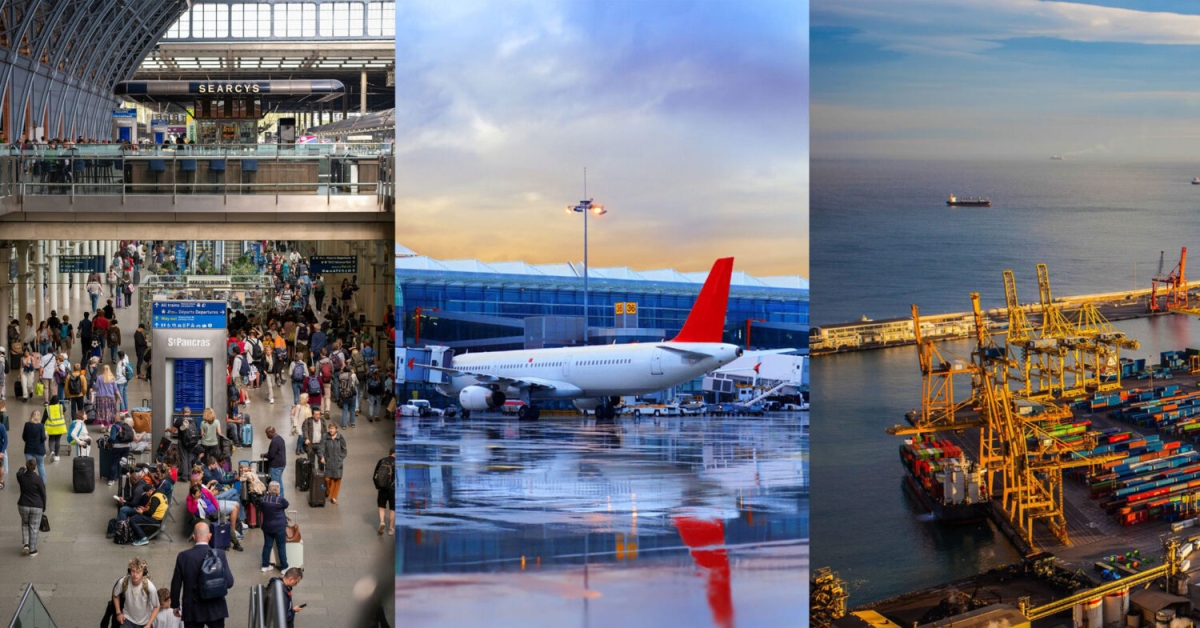
Critical infrastructure operates in an increasingly complex environment. Whether airports, transport networks, industrial sites or public spaces, organisations today face a dual challenge: strengthening security while improving operational efficiency.
This shift is taking place against a backdrop of increasing traffic and footfall, growing safety and security expectations, and the need to optimise the use of available resources. For many operators, the challenge is no longer simply responding quickly when an incident occurs, but having the information needed to anticipate risks and make the right decisions at the right time.
For many years, video was primarily used as a surveillance tool. Its role was to observe, record and provide evidence for analysis after an event. Today, this approach is no longer enough.
Turning Data into Real-Time Operational Intelligence
As modern infrastructure becomes increasingly complex, organisations are looking for tools that can transform data collected on the ground into actionable operational intelligence in real time.
This is precisely the shift being driven by Computer Vision technologies. By combining video analytics, artificial intelligence and operational data, these technologies enable organisations to extract greater value from their existing infrastructure.
The objective is no longer simply to see what is happening on the ground. It is to provide operators with a deeper understanding of situations so they can identify anomalies more quickly, anticipate disruptions and make better-informed decisions.
Innovation in the Transport Sector
This transformation is particularly evident in the transport sector. The European PREVENT PCP programme, to which Ipsotek contributed, is a clear example of this evolution. Its objective was to strengthen security across public transport and surrounding public spaces through technological innovation, including abandoned-object detection, non-biometric search and tracking, and improved large-scale crisis management.
The trials involved more than 500 cameras across several European sites and demonstrated that the more intelligent use of video can deliver benefits extending far beyond security.
By providing a faster understanding of events and their potential impact, these capabilities can help limit disruption, improve team coordination and support operational continuity in complex environments.
This evolution is also taking place within a rapidly changing regulatory and technological landscape. In Europe, the GDPR and the AI Act are redefining how artificial intelligence technologies are designed and used.
At the same time, the rise of generative AI is accelerating discussions around governance, transparency and trust in AI systems. For critical infrastructure, this presents an opportunity to develop approaches focused on understanding events and operational risks rather than identifying individuals.
The most advanced Computer Vision solutions can therefore improve situational awareness, optimise incident management and support decision-making while respecting European principles for data protection and trustworthy AI.
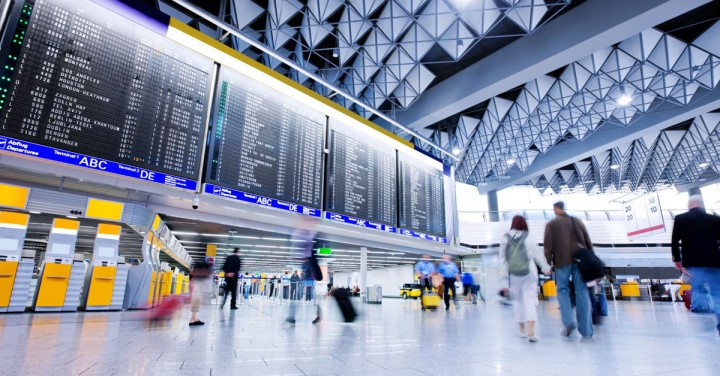
The same approach can now be seen in some of the world’s most demanding airport environments. At Abu Dhabi’s Midfield Terminal Building, one of the largest airport terminals in the world, video analytics solutions are used to strengthen real-time situational awareness, optimise passenger-flow management, improve incident response times and provide command centres with greater visibility.
In this type of environment, the value of artificial intelligence does not lie solely in its ability to detect an abandoned object or unauthorised access. More importantly, it lies in its ability to provide a comprehensive understanding of a situation, enabling operators to respond more quickly, allocate resources effectively and maintain the smooth flow of operations.
A similar approach is now being implemented across several Romanian airports. Video analytics solutions are being used to improve operational situational awareness and support passenger-flow management in environments where smooth movement and security must be maintained simultaneously.
By providing real-time visibility into occupancy levels, potential congestion areas and situations that could disrupt operations, these systems enable teams to intervene more quickly and optimise the use of available resources.
A More Intelligent and Operational Use of Video Data
Across these examples, a broader trend is emerging. Organisations are no longer looking only for surveillance systems capable of observing their environment. They are looking for platforms that can provide a real-time understanding of what is happening on the ground, enabling faster, more relevant and better-coordinated decisions.
Whether detecting an abandoned object across a transport network, optimising passenger flows at a major international airport or improving incident management across critical infrastructure, the value of video no longer lies in the images themselves, but in the intelligence they can generate.
Deployments delivered through the PREVENT PCP programme, as well as across major infrastructure environments in Abu Dhabi and several Romanian airports, demonstrate this shift towards a more intelligent use of video data.
As security, operational efficiency and regulatory compliance requirements continue to increase, the ability to transform existing infrastructure into a source of operational intelligence is becoming a strategic advantage.
Tomorrow’s most successful organisations will not necessarily be those with the greatest number of cameras, but those that know how to use the information generated by those cameras to anticipate more effectively, understand situations more clearly and act more efficiently.
The future of video is no longer limited to surveillance. It lies in its ability to become a genuine operational intelligence tool that supports the security, performance and resilience of critical infrastructure.
Originally published in L'entreprise Digitale